7 Use Cases for AI Product Videos
Every product video has a different job; these seven use cases connect a creative idea to a specific communication need.
Define the video's job first
Product videos serve different purposes. Introducing a new product, highlighting a detail and directing viewers to a product page require different stories. When planning an AI product video, define its job before choosing its visual style.
Generative tools can help explore environments and storytelling approaches, but product appearance and claims must remain accurate. These seven use cases connect creative ideas to specific communication needs.
1. Build interest before a launch
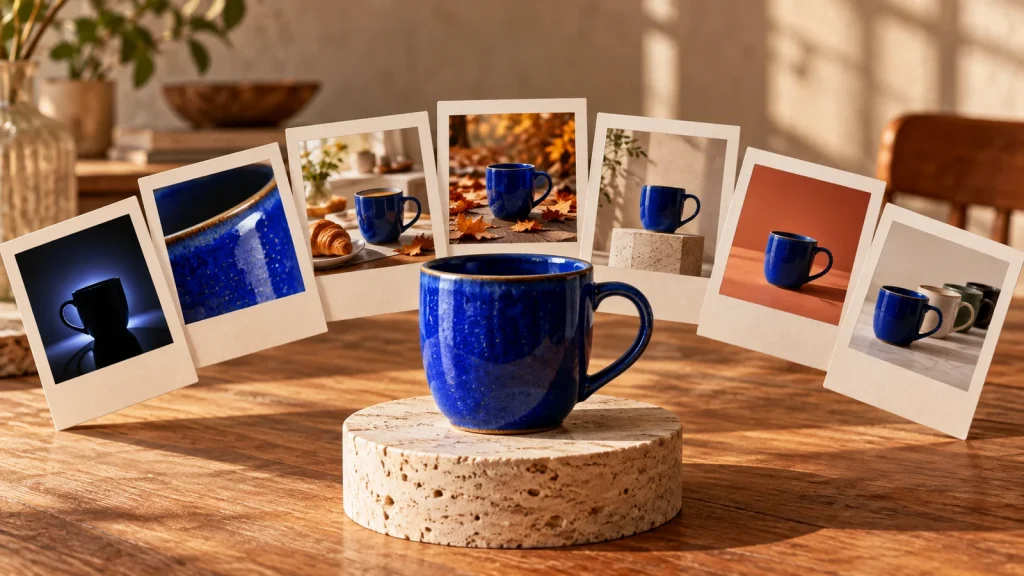
A teaser can focus on a silhouette, material or design feature instead of revealing the entire product. An abstract setting can create curiosity, provided it retains a meaningful connection to the brand or category.
Plan how teaser colours, rhythm and visual direction will connect to the main launch film. The reveal can then continue an established story rather than introduce an unrelated campaign.
2. Make product details visible
A surface texture, design feature or packaging detail can become the focus of a short video. Accuracy matters particularly in close-ups. Generated details should be checked against real product assets and corrected where necessary.
3. Show a relevant use context
Presenting where or when a product is used can help viewers relate it to their own lives. An accessory in an everyday setting or a drink in a serving occasion can provide a useful narrative starting point.
Avoid implying functions the product does not have. Scenes suggesting performance or a physical outcome should be based on information verified by the brand.
4. Adapt the atmosphere for a seasonal campaign
A season, occasion or campaign theme can shape the environment around a product. Start with the existing brand identity and adapt it to the context rather than rebuilding the visual language for every campaign.
5. Create short stories for social media
Instead of listing every feature in one video, give each piece one message. One can focus on design, another on use and another on the product range. Each video should make sense on its own, without requiring viewers to watch the series in order.
6. Compare different advertising ideas
Alternative openings or backgrounds can support creative tests. Define the test objective and aim for comparable delivery conditions. A variation’s usefulness should be assessed against the chosen outcome, not its appearance alone.
7. Bring a product range into one visual world
Related models or colour options can share a composition and movement style. Check that each variant is identified accurately and that packaging and colour differences remain visible. Visual unity should not erase real distinctions between products.
Define the first AI product video's scope
Begin with one product, one message and a specific distribution channel. Share product images, details that must not change and the required deliverables. This provides a practical foundation for deciding whether AI, live action or a hybrid approach suits the idea.
Explore NeoMinds Media services or contact us to develop your product video brief.
CATEGORIES