Fixed Product, Changing Worlds: Consistency in AI Advertising
The product can stay the same while its visual world changes; what matters is that the change carries the brand's story.
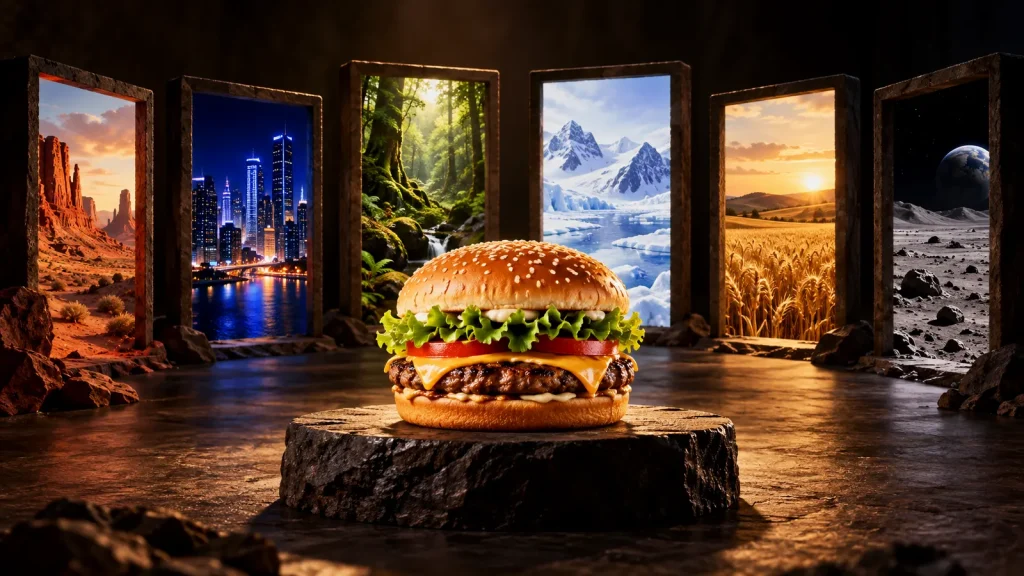
One product, different worlds
A product story includes more than the product itself. Its setting, lighting and surrounding visual elements influence how the audience perceives it. Show the same burger in a desert canyon or a night-time city and the emotional context changes along with the background.
The central question in AI product advertising is this: how far can the story change while the product remains recognisable? It requires visual variety and brand consistency to be considered together. The sections below outline what to check when building different worlds around a single product.
Keep the product at the centre
When developing different atmospheres, check whether the product still holds attention. A setting, colour treatment or movement can become so dominant that viewers remember the scene but forget what is being advertised.
For food advertising, ingredient appearance, proportions and presentation need particular care. Creative interpretation should be assessed alongside product accuracy so the film does not create an expectation that the real product cannot meet.
Give each world a clear purpose
Several visual treatments do not automatically amount to several useful ideas. Establish what each direction contributes. One might emphasise texture, another could suggest sharing, while a third might explore a more energetic occasion.
These are possible directions for a similar brief. The important principle is to derive visual choices from a message the brand can own. Variation without a shared purpose can weaken a campaign.
Build consistency through specific choices
A common colour, framing approach, product position or editing rhythm can connect different settings. The images do not have to look identical, but viewers should be able to follow one brand story through them.
Logo and copy placement contribute to that connection. In AI product advertising, check product visibility in every required aspect ratio rather than assuming a horizontal composition will retain its impact when cropped vertically.
Turn visual variety into a measurable question
Different worlds can provide creative variants for advertising tests. Their effectiveness cannot be established by appearance alone. Choose the campaign objective first and consider differences in audiences and delivery conditions when reviewing results.
One version might generate more views while another encourages more product-page visits. The relevant measure depends on the business objective. Any published account of campaign performance should use verified results.
Develop a visual world for your product
This approach to AI product advertising invites you to consider several ways of telling the story of one product. Start by defining the product details that must stay accurate and the feeling the brand wants to communicate. Creative direction is then developed within those limits.
CATEGORIES