Influencer Marketing Is Changing: Out With Product Ambassadors, In With AI Ambassadors?
Virtual and AI-generated ambassadors are reshaping influencer marketing. The data shows human ambassadors are not finished; their role is being redistributed.
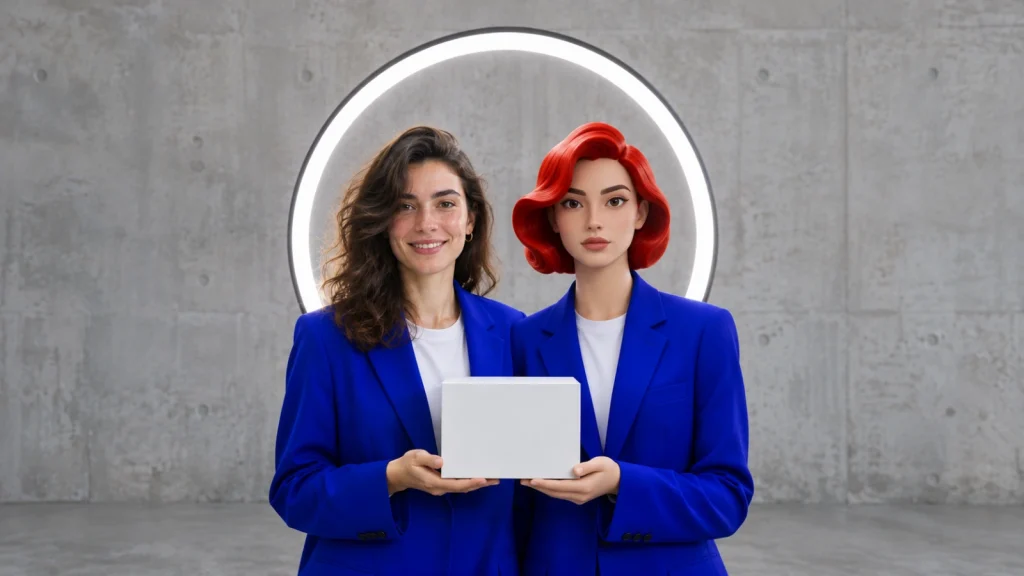
Are the humans who front brands slowly handing the job to digital personalities that never age, never cause a scandal and create content around the clock? The answer is more interesting than you might expect.
What is happening?
Virtual and AI-generated influencers are no longer a toy for tech enthusiasts. The movement that started with names such as Lil Miquela and Noonoouri now appears in the campaign plans of major brands. Hugo Boss with Noonoouri, Samsung with Lil Miquela and Kenza Layli, reported to have worked with Hyundai, are often cited as examples.
What do the numbers say?
In this field the numbers differ widely by source, because each firm defines “virtual influencer” differently. So they need to be read with care:
- Research firms estimate the virtual influencer market at roughly 9 to 13 billion dollars for 2025. There is no primary-source figure that measures brand deals alone.
- In 2024, Ogilvy projected that virtual influencers could take up to 30% of influencer budgets by 2026. That is a forecast; how much of it has come true depends on the source.
- Over the same period, budgets are shifting from big-name influencers to nano and micro creators; eMarketer forecasts that nano and micro influencers will take 45.5% of influencer spending in 2026.
An honest reading: It is too early to say “AI ambassador in, human ambassador out.” The data shows not that humans are disappearing, but that budget and roles are being redistributed.
Why do brands want AI ambassadors?
- Control: The character belongs to the brand; the risk of a wrong post, a sudden scandal or a contract dispute is very low.
- Scale: The same character can create content in different languages, for different markets, around the clock.
- Consistency: Look, tone and message always stay at brand standard.
- Cost flexibility: Not every campaign needs a new shoot and production; a character built once can be reused.
- Intellectual property: The character becomes the brand’s own asset; it is not lost when an ambassador leaves.
But the risks are real too
- Trust and authenticity: Audiences trust a real person’s real experience. An AI character saying “I tried this product” runs into a credibility limit.
- Transparency: Brands that do not clearly say a character is AI-generated can lose trust. Advertising disclosure rules need legal review in each market.
- Copycats and differentiation: As tools get cheaper, anyone can create a character. It is story and consistency that set one apart, not the face.
- Emotional bond: It is hard for a character to fully replace a human ambassador who builds a community, replies and shares their own life.
Who, when? A simple decision guide
- Aesthetic-led campaigns such as luxury, fashion and beauty: a strong candidate for an AI ambassador.
- Multilingual, multi-market, always-on content: AI ambassador.
- Recommendations based on product experience (food, health, tech reviews): human ambassador.
- Community building and live interaction: human ambassador.
- Brand universe and storytelling: hybrid.
The winning model: hybrid
The approach that stands out in this field is to make an AI character the “face” of the brand and to use human micro-influencers for trust and community feel. So product ambassadors do not disappear; their role changes. Humans bring reality and community; the AI ambassador brings control, scale and the brand universe.
What should a brand do today?
- Set the goal first: awareness, trust or sales?
- Run a small pilot: one character, one market, clear measurement.
- Design the character as a brand asset: write down its identity, voice, values and story.
- State transparently that it is made with AI.
- Support it with human micro-influencers and measure the results separately.
Conclusion
Influencer marketing is not disappearing; it is changing shape. The race will not be won by the brand that uses the most AI, but by the one that gives the right role to the right ambassador.
At NeoMinds Media, we design AI commercial films and brand characters for your brand together with human ambassadors. If you would like to discuss a pilot character, get in touch.
Sources
- Branding in Asia — Lil Miquela Joins Steve Aoki, Millie Bobby Brown and Ninja in New Samsung Global Campaign, 2019
https://www.brandinginasia.com/ninja-joins-steve-aoki-bobby-brown-and-miguela-in-new-samsung-global-campaign/ - Social Media One — Noonoouri: virtual influencer, digital model and international Instagram star
https://socialmediaagency.one/?p=19350 - Tech Times — Morocco’s Kenza Layli has Become the World’s First AI Beauty Queen, 2024
https://www.techtimes.com/articles/306486/20240709/moroccos-kenza-layli-become-worlds-first-ai-beauty-queen.htm - Straits Research — Virtual Influencer Market
https://straitsresearch.com/report/virtual-influencer-market - Market Research Future — Virtual Influencer Market
https://www.marketresearchfuture.com/reports/virtual-influencer-market - Mediaweek — report on Ogilvy’s Future of Social, 2024
https://mediaweek.com.au/virtual-influencers-will-grab-30-of-influencer-budgets-ogilvys-future-of-social-report - eMarketer — Creator Economy 2026
https://emarketer.com/content/creator-economy-2026
CATEGORIES